

312+
Tri-wavelength matrix
650nm
2–3mm · Follicle activation
780nm
3–5mm · Vascular bridge
808nm
5–6mm · Deep tissue protection
THE PROBLEM
Why single-wavelength therapy has a ceiling
Traditional red light therapy devices use a single wavelength, typically around 650nm. While effective at surface level, this approach has inherent limitations in penetration depth and cellular activation.
The scalp's complex structure requires multiple wavelengths to reach different tissue depths and activate various cellular processes simultaneously.

Treating only the follicle while the ecosystem around it degrades is like watering a plant without addressing the soil or irrigation. You get some result. But not the full picture.
1
Depth targeted by 650nm alone
Red light reaches the follicle — but stops there. Everything deeper goes untreated.
3
Distinct biological layers in the scalp
Follicle stem cells. Mid-dermal blood vessel networks. Subdermal vascular plexus. Each layer plays a different role in whether hair grows.
6mm
Max depth reached by 808nm NIR
The TriSpectrum covers all three layers — from the surface to the deep connective tissue — in a single 6-minute session.
Three wavelengths.Three depths.

Surface tissue activation
This wavelength penetrates the superficial layers of skin, stimulating cellular activity and promoting surface-level healing.
- Enhances collagen production
- Improves skin texture and tone
- Reduces fine lines and wrinkles
- Accelerates wound healing

Deep tissue penetration
There's a biological gap that two-wavelength devices miss: everything between 2–3mm and 5–6mm — the mid-dermis, where blood vessel networks and connective tissue structures anchor and feed every follicle.
780nm fills that gap. It improves circulation and structural integrity in the mid-dermal layer, enhancing oxygen and nutrient delivery to follicles that red light energizes but can't fully sustain on its own. In a comparative wavelength study, 785nm ranked second only to ~830nm in hair growth efficacy. A 2025 Journal of Biophotonics study confirmed the 680+780nm combination outperforms any single wavelength.
- Mid-dermal blood flow improves oxygen supply to every follicle
- Connective tissue scaffolding strengthens follicle anchoring
- Vascular efficiency increases nutrient delivery
- The structural environment supporting follicle growth improves

Deepest reach in the spectrum
The deepest penetrating wavelength, targeting muscle tissue and joints for comprehensive therapeutic benefits.
- Targets deep muscle tissue
- Relieves chronic pain
- Improves joint mobility
- Enhances athletic performance
The right tool for
where you are
Every Capillus device is FDA-cleared, clinically backed, and built around the same principle: six minutes a day, medical-grade lasers, and real results. The difference lies in the depth of treatment and the stage of hair loss each is designed for.
|
TriSpectrum Recommended |
Spectrum |
PRO |
|
|---|---|---|---|
| Wavelengths | 650nm + 780nm + 808nm | 650nm + 808nm | 650nm |
| Laser Diodes | 312 + tri-wavelength matrix | 312 + dual wavelength matrix | 272 |
| Scalp depth | 5–8mm. Same max depth as Spectrum — but 780nm fills the mid-layer gap | 808nm NIR clears the entire scalp layer (5–8mm) with irradiance remaining | 650nm red penetrates the full dermis; literature consistently shows 3–5mm in scalp tissue |
| Follicle activation | ✓ | ✓ | ✓ |
| Deep tissue (808nm) | ✓ | ✓ | – |
| Mid-dermal vascular (780nm) | ✓ | – | – |
| Post-transplant support | ✓ | ✓ | ✓ |
| Bluetooth + App | ✓ | ✓ | ✓ |
| Treatment time | 6 minutes/day | 6 minutes/day | 6 minutes/day |
| Warranty | 3 years | 3 years | 3 years |
| Cap Size | 25" | 25" | 24" |
| Best for | Moderate–advanced thinning & post-transplant | Moderate thinning | Early prevention |
Sources
- Avci et al. (2013) — Semin Cutan Med Surg — 650nm effective in dermis to ~5mm in human tissue.
- Jagdeo et al. (2012) — JAMA Dermatology — 830nm NIR penetrates full scalp thickness and reaches subcranial tissue.
- Hamblin (2016) — Photobiomodul Photomed Laser Surg — 808nm identified as optimal NIR for deep tissue PBM; transcranial studies confirm tissue depth well beyond 10mm.
- Salehpour et al. (2018) — transcranial 808nm study showing measurable cortical irradiance.
Effective for Both Men and Women
Science Meets Visible Results
Capillus Spectrum uses clinically proven red laser light to revitalize hair follicles, stimulate circulation, and promote fuller, healthier hair with just 6 minutes a day.


Photobiomodulation (PBM) — also called low-level laser therapy (LLLT) — works by delivering coherent light at specific wavelengths to biological tissue, where it's absorbed by photoreceptors in cells and triggers a cascade of metabolic responses.
The primary target in hair follicles is cytochrome c oxidase, a mitochondrial enzyme that absorbs red and near-infrared light and converts it into ATP — cellular energy. More energy means more biological activity: faster cell division, better protein synthesis, more robust hair growth cycles.
"Not redundantly, but strategically — each wavelength targeting a distinct biological layer and mechanism."
But the scalp isn't just follicles. It's a layered system of tissue, blood vessels, connective structures, and immune activity. The therapeutic window for photobiomodulation spans roughly 600–1,100nm — the range in which light penetrates tissue meaningfully without being blocked by melanin, hemoglobin, or water. Within that window, longer wavelengths reach deeper.
The TriSpectrum was engineered to deploy three wavelengths across that window — not redundantly, but strategically — each targeting a distinct biological layer and mechanism.
The TriSpectrum is FDA-cleared as a Class II medical device for the treatment of androgenetic alopecia in men and women. Individual results vary.
Light Absorption
Photons at 650–808nm penetrate scalp tissue and are absorbed by cytochrome c oxidase in follicle mitochondria.
ATP Synthesis
Mitochondrial activity increases. ATP production rises — giving follicle cells the energy to divide and build hair proteins.
Anagen Re-entry
Dormant follicles return to the active growth phase. Hair cycle extends. Shedding slows. Shaft diameter increases.
Vascular Support
780nm and 808nm improve microcirculation and reduce deep inflammation — sustaining the scalp environment that allows growth to continue.
What Changes
In Every 6-Minute Session
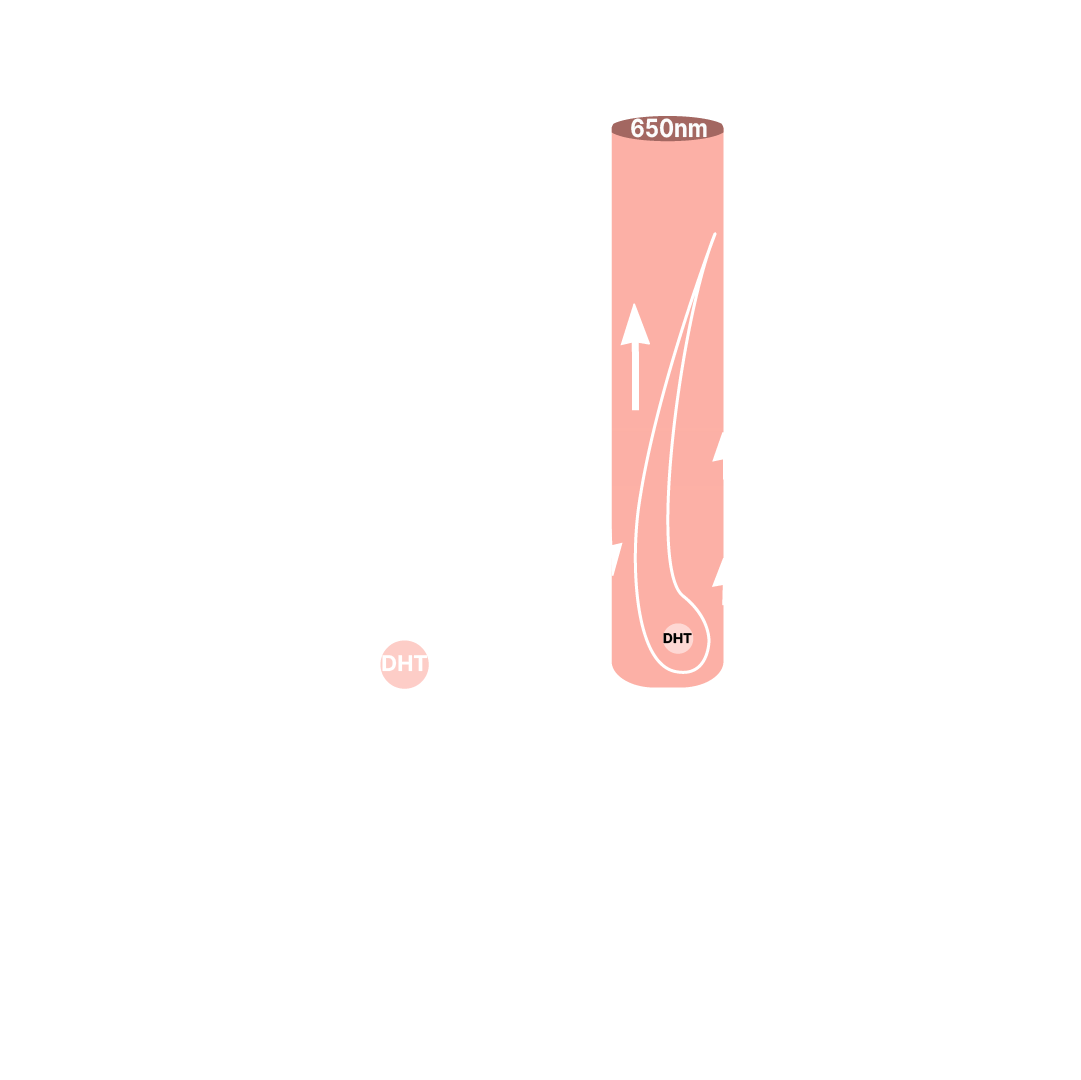
ACTIVATE
650nm Red Light
It restores cellular energy that drives hair growth, pushing dormant follicles back into the active growth phase and reversing DHT-induced miniaturization.
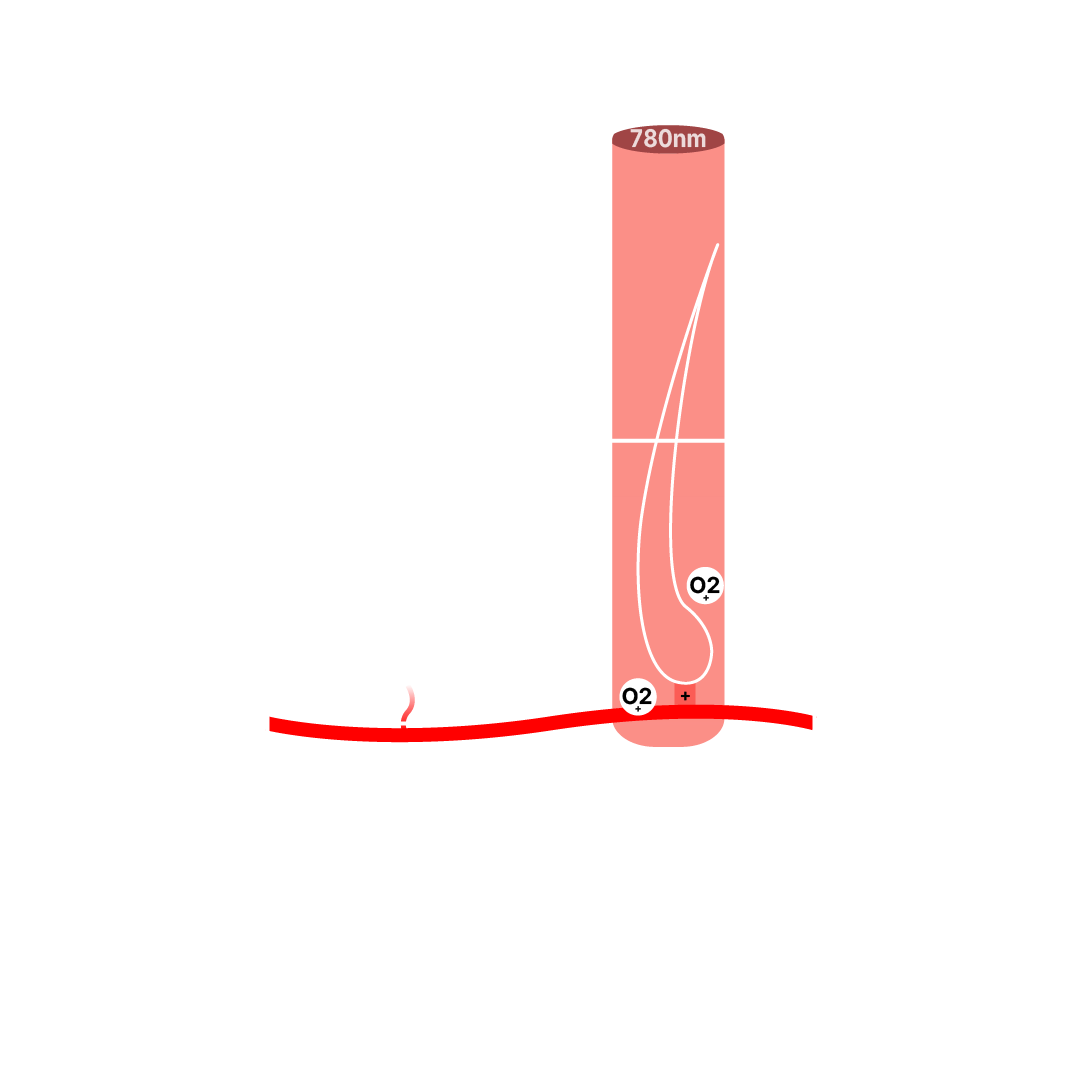
FEED
780nm Near-Infrared
Improves the blood vessels and connective tissue that supply follicles. More oxygen. More nutrients. The structural environment that healthy hair growth requires.
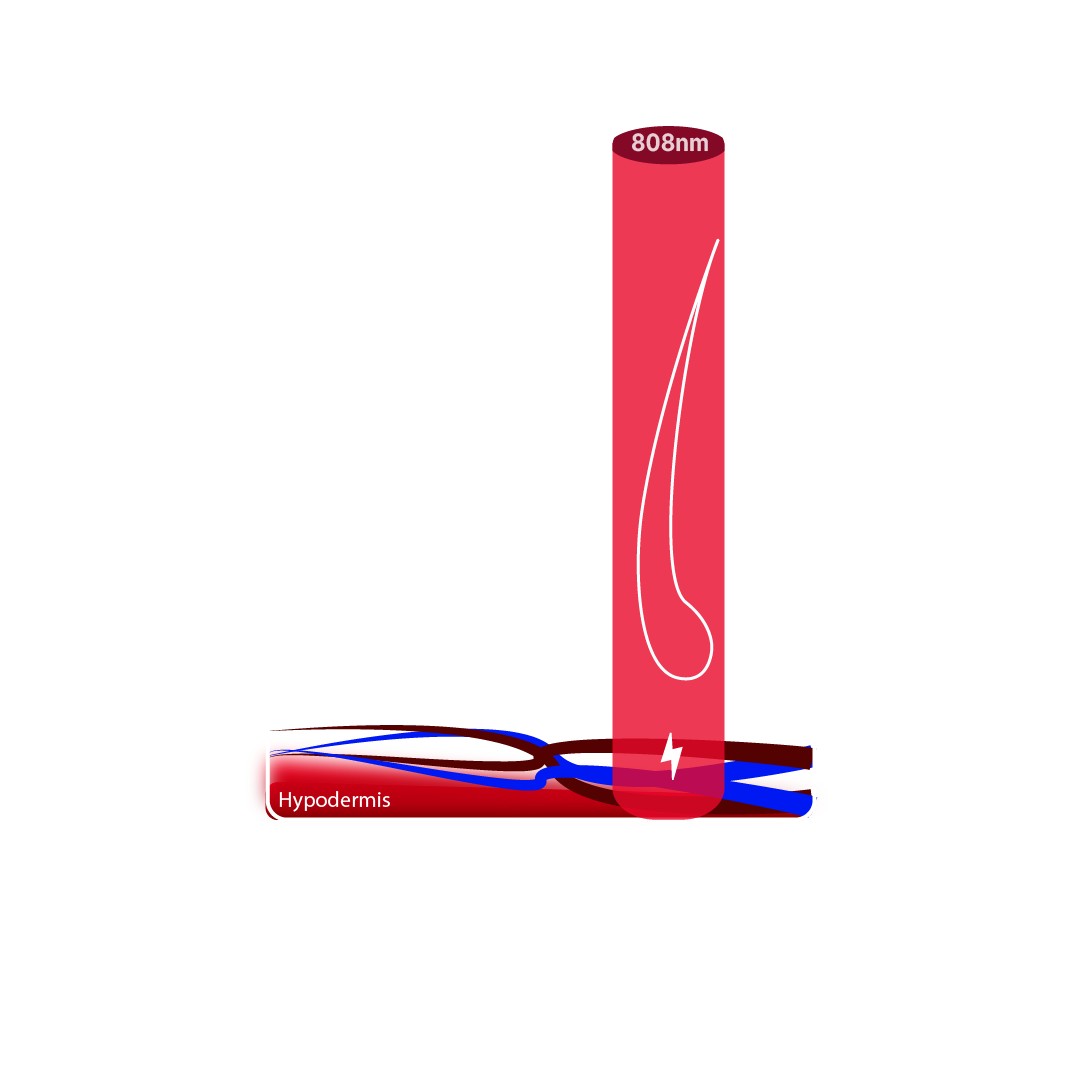
PROTECT
808nm Deep NIR
Reaches the deep scalp tissue to reduce hidden chronic inflammation and activate the subdermal vascular network. The environment around your follicles improves not just the follicles themselves.
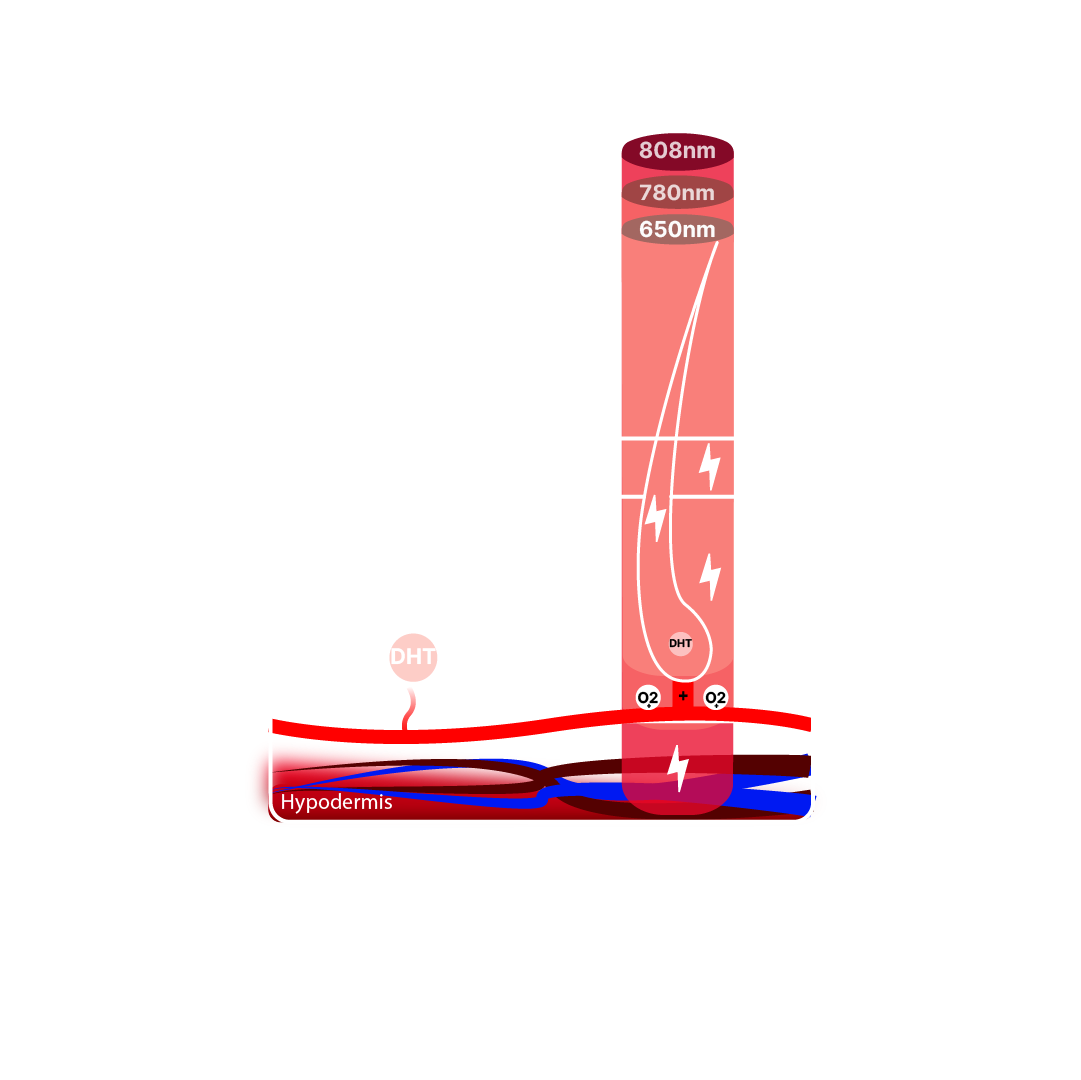
RESTORE
All Three Together
Three wavelengths working simultaneously. Three layers of your scalp treated in a single session. The complete ecosystem intervention in six minutes a day, from home.

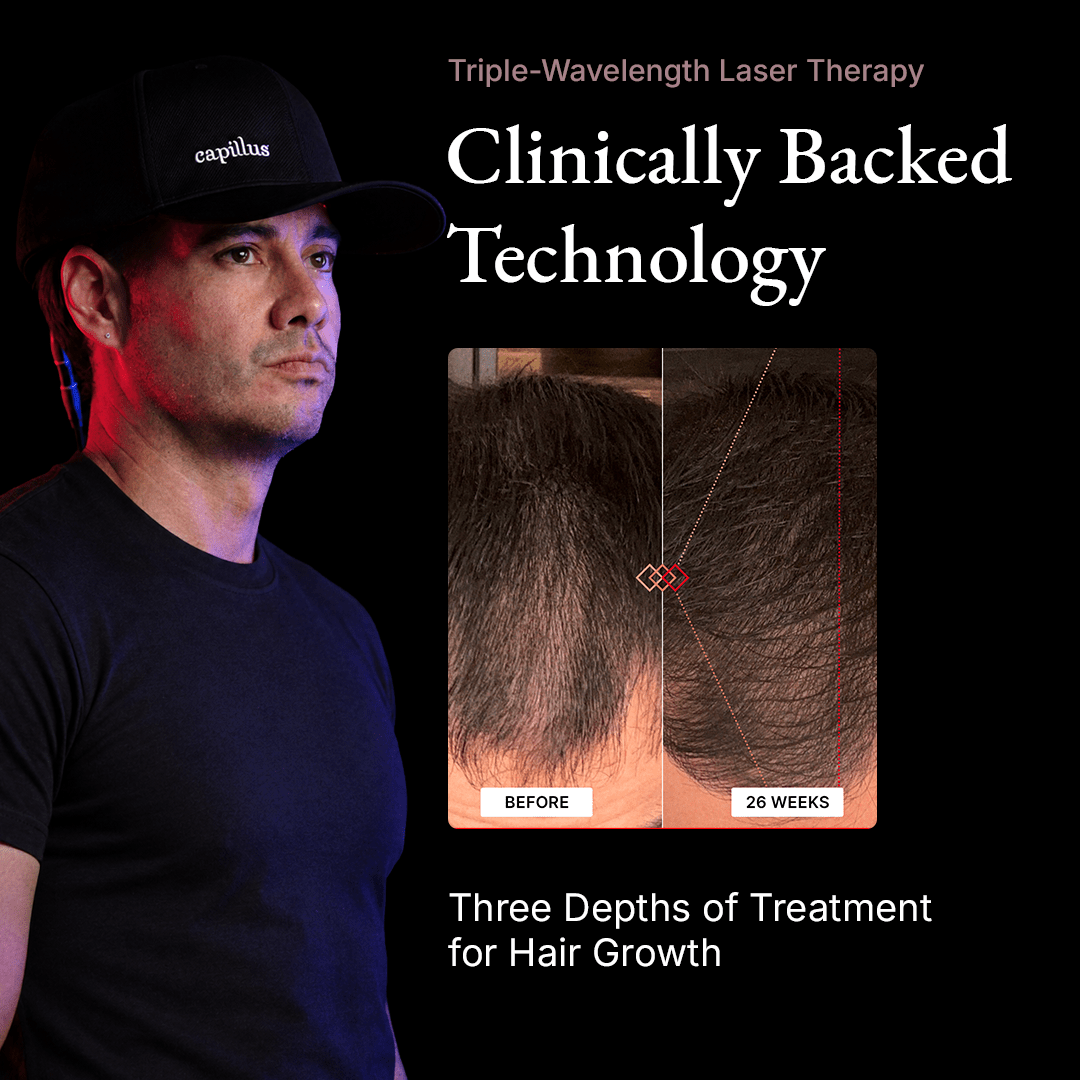


Capillus TriSpectrum
The most advanced hair regrowth cap on the market, and the only device to combine three clinically selected wavelengths in a single cap, where 650nm activates follicle stem cells, 780nm improves mid-dermal blood supply, and 808nm reaches the deepest vascular layers where chronic inflammation drives advanced hair loss.
Designed for moderate-to-advanced thinning and post-transplant support built with 312 medical-grade laser diodes. 6 minutes daily. FDA-cleared.
If you have any questions, you are always welcome to contact us. We'll get back to you as soon as possible, within 24 hours on weekdays.
-
Shipping Information
Use this text to answer questions in as much detail as possible for your customers.
-
Customer Support
Use this text to answer questions in as much detail as possible for your customers.
-
FAQ’s
Use this text to answer questions in as much detail as possible for your customers.
-
Contact Us
Use this text to answer questions in as much detail as possible for your customers.
What is the Capillus TriSpectrum?
The Capillus TriSpectrum is an FDA-cleared at-home laser cap that uses three wavelengths of light: 650nm red and both 780nm and 808nm near-infrared to support hair regrowth. Unlike single-wavelength devices, it treats hair loss at three different depths simultaneously: from the follicle surface down through the mid-dermis and into the deep scalp tissue. Treatment takes 6 minutes per day.
How is the TriSpectrum different from the Capillus Spectrum?
780nm near-infrared. This wavelength bridges the biological gap between 650nm (2–3mm penetration) and 808nm (5–6mm penetration), targeting the mid-dermis, where blood vessel networks and connective tissue structures reside. In independent comparative research, 785nm ranked as the second most effective wavelength for hair growth. The TriSpectrum is designed for patients seeking the most comprehensive photobiomodulation therapy currently available at home.
How do three wavelengths work together?
Think of your scalp as a three-layer system. The 650nm red light works at the top layer 2 to 3 millimeters deep, directly energizing the cells inside each follicle to produce more ATP, the biological energy that drives hair growth. The 780nm near-infrared reaches the middle layer, 3 to 5 millimeters, improving the blood vessel networks and structural tissue that feed follicles. The 808nm near-infrared light goes deepest, reaching 5 to 6 millimeters and targeting the subdermal vascular network, reducing chronic low-grade inflammation that accelerates hair loss over time. All three work simultaneously during your 6-minute daily session.
Why does penetration depth matter?
Hair loss is not only a follicle problem. Years before visible thinning, low-grade inflammation builds up in the tissue surrounding follicles. Blood vessels become less efficient. Connective tissue weakens. A device that only reaches 2–3mm can stimulate follicles directly, but it cannot address the deeper tissue environment driving those changes. TriSpectrum addresses both.
Is the TriSpectrum FDA-cleared?
Yes. The Capillus TriSpectrum is FDA-cleared for the treatment of androgenetic alopecia (genetic hair loss) in men and women. It has undergone FDA regulatory review and is approved as a Class II medical device for at-home hair restoration.
When will I see results?
Hair growth biology moves at the pace of hair growth cycles, which last 3–6 months. The TriSpectrum extends the active growth phase and may help improve the gradual, compound miniaturization changes that accumulate over time. Results vary based on degree of thinning, age, health status, and consistency of use.
Is this a laser or LED device?
Laser. The TriSpectrum uses medical-grade laser diodes that make direct contact with the scalp. LED panels emit broad-spectrum, non-coherent light held at a distance; power drops with every centimeter. For the stated penetration depths to be clinically meaningful, adequate power density at the scalp surface is required. Direct-contact laser diodes achieve this. Distance-based LED panels generally do not, regardless of the wavelength printed on the box.
Can I useit with minoxidil or finasteride?
The TriSpectrum is particularly well-suited for patients with moderate-to-advanced androgenetic alopecia, where single-wavelength approaches have plateaued; patients seeking the most comprehensive at-home photobiomodulation available; patients recovering from or planning hair transplant surgery; and patients combining laser therapy with other treatments who want the strongest biological foundation possible.
Your Scalp Is a System.
Treat It Like One.
FDA-cleared. Three wavelengths. Six minutes a day. Our most comprehensive multi-wavelength system to date, designed for individuals seeking broader scalp coverage.
Free Shipping
Assembled & Serviced in USA
HSA/FSA Eligible