


Capillus PRO
$1,699.00

Capillus Spectrum
$2,699.00

Capillus TriSpectrum
$3,299.00


Proof-backed
FDA-cleared caps. Clinical study data.
Six minutes a day
Hands-free. Drug-free. Easy to keep.
Hands-Free Use
No cords or handheld effort
Every Day Use
Consistency forms routine

Hair solutions shouldn't be stressful
Capillus was engineered to break this cycle in just 6 minutes a day.


Compare devices
The Right Device, Matched to Your Needs
Choose the Capillus device that fits your coverage, wavelength, and treatment needs.
HSA/FSA eligible

Capillus Spectrum
33 reviews
$2,699.00
- 312 Active Laser Diodes
- Dual Wavelength Spectrum
- Average Coverage Profile
FLAGSHIPHSA/FSA eligible

Capillus TriSpectrum
7 reviews
$3,299.00
- 312 Tri-Wavelength Diodes
- Triple Wavelength Spectrum
- Advanced Scalp Coverage
HSA/FSA eligible
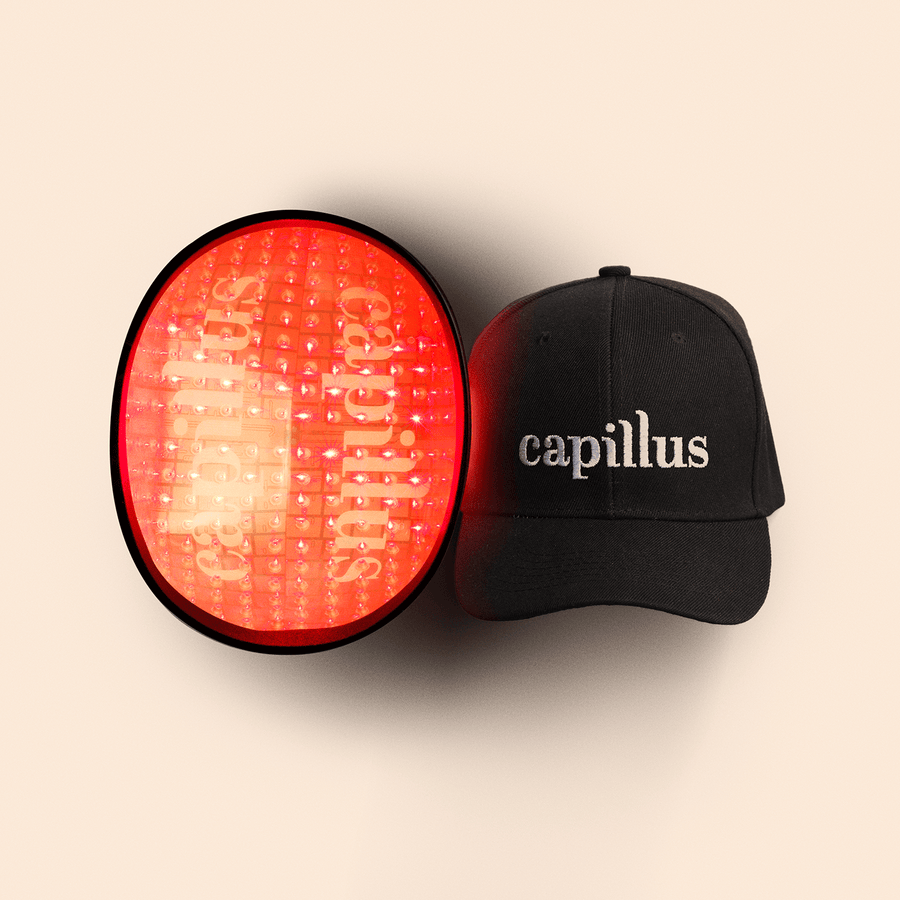
Capillus PRO
63 reviews
$1,699.00
- 272 Professional Diodes
- Single Premium Wavelength
- Optimal Therapeutic Reach
transformations that last
Real customer results
Over 100,000 satisfied customers use the Capillus Cap daily, regaining their confidence.


Photobiomodulation explained
How Laser Therapy Works

Biological pathways
Low-Level Laser Therapy (LLLT) uses coherent light to directly stimulate cell energy pathways within dormant hair follicles.
1
Follicular Absorption
Laser light penetrates deep into the dermis layer to target follicle cells.
2
Mitochondrial Activity Boost
Energy absorption enhances cellular respiration and ATP synthesis.
3
Reversed Thinning Phases
Follicles exit resting state and re-enter active, healthy growth phases.
Double-blind clinical trials
Documented Results Over 17 Weeks
+51%
Mean Increase in Terminal Hair Count
Compared to base state in clinical study
0%
Reported Side Effects or Systemic Risks
Unlike common pharmaceutical alternatives
6 MIN
Daily Therapy Duration Required
Programmed auto-shutoff functionality

Pure medical-grade solid-state lasers
Even scalp coverage across critical thinning vectors
Safe for integration with secondary hair-growth treatments
Medical Lasers vs. Standard LEDs
Why light quality defines clinical outcomes
Unlike LED caps that emit scattered, broad-spectrum light, Capillus devices utilize premium solid-state laser diodes. These emit coherent, focused wavelengths that penetrate the outer dermis and directly reach hair follicles.
Capillus Medical-Grade Lasers
Clinical standardCoherent light provides focused penetration reaching 3-5mm beneath the scalp surfaces directly.
Standard Broad-Spectrum LEDs
Cosmetic onlyScattered light results in superficial heat rather than deep cellular absorption pathways.
We’re Serious About Facts.
Our customer support is available Monday to Friday: 8:30am-5:30pm. (ET)
Are there clinical trials that support the efficacy of Capillus?
Yes. Capillus Laser devices only use clinically proven technology. In fact, the premiere laser therapy cap model from Capillus - the CapillusPro model - has been proven effective through an independently reviewed clinical trial for which results have been published in an esteemed medical journal, Dermatologic Surgery. Dermatologic Surgery is a monthly peer-reviewed journal published by American Society for Dermatologic Surgery that deals with the subject matter of dermatology.
The CapillusPro device has been clinically proven in a double-blind clinical study registered on ClinicalTrials.gov and managed by a neutral third party.* Clinical trial data indicated that low-level laser treatment of the scalp for 17 weeks with the CapillusPro device significantly improved hair counts by 51% in study participants who used the active (non-placebo) device. Subjects were able to use the device on a self-treatment, home-use basis. No side-effects of any kind were reported from clinical trial participants. The CapillusPro was proven to be a safe and effective treatment for androgenic alopecia within the appropriate stages of hair loss and skin tones as per FDA clearance.
Please note that the results mentioned above are specifically for the CapillusPro model. There have been no clinical trials to date on the other Capillus models to be able to assert an exact percent of average increase of hair.
*See details of clinical trials at ClinicalTrials.gov
There have also been many other clinical trials that support the efficacy of low-level laser technology for treatment of androgenetic alopecia.
Is Capillus good for use after hair transplant procedures?
Yes, Capillus uses safe, low-level lasers to stimulate, energize, and renew cells within the hair follicle for thicker, healthier hair. It also helps those who’ve undergone a hair transplant procedure to protect the new hair growth. Follow your transplant physician's directions for follicle support after transplant.
Why should I choose Capillus over other brands of laser therapy?
Capillus revolutionized the hair restoration industry with the Capillus laser cap a decade ago by making professional-strength laser therapy available to hair loss patients at home. Capillus was the first laser therapy cap to be cleared by the US FDA for treatment of androgenetic alopecia. Since then, many have tried to imitate. Don't settle when it comes to your hair health.
At Capillus, we prioritize excellence above all else. Capillus caps are designed, engineered and assembled in our US-based, ISO13485-certified facility. We only use the highest quality, medical-grade lasers. Our premium laser caps are backed by our elite Physician Network, FDA clearances, our Satisfaction Guarantee, Manufacturer Warranty, and in-house, expert support. We offer choices in models making our caps affordable. We accept most credit cards and offer several payment options, including various financing options making it more affordable.
What is the difference between lasers and LEDs for hair regrowth?
Capillus laser therapy devices use only medical grade laser diodes as a light source. What does this mean? You get the right amount of light energy exactly where you need it. Capillus uses lasers because the output penetrates deeper, better and is clinically proven to be therapeutic for their specific purpose.
Laser light does not spread as much as LEDs over the same distance, which allows lasers to penetrate tissue to a deeper level with higher concentration. For photobiomodulation therapy, the farther the light is from the target, the less intense and less effective the treatment will be.
For light therapy to be effective, it needs to reach the cells that respond well to photobiomodulation therapy.
LASER stands for Light Amplification by Stimulation of Emitted Radiation. This simply means that a source of light is amplified within a gain medium and emitted in a specific way. LASER produces a very intense beam of light which has the following properties:
- Monochromatic (meaning it consists of one wavelength)
- Coherent (meaning all parts are in phase)
- Collimated (meaning all parts travel in one and same direction)
LED stands for Light-emitting Diode. And it’s pretty much just that. A diode that emits light when electricity passes through it. Often in pretty colors.
LED light can produce collimated light (with a focusing lens) but not coherent light thus they do not concentrate all their power in a coherent beam. Laser diodes by definition produce effective gaussian to provide a wider range of coverage and coherent light output.
Key Differences Between the Capillus Caps?
While each of the Capillus caps has numerous similar features, the primary difference between them is a difference in scalp coverage, as well as total energy output. What does more lasers mean? Density of lasers translates to density of results. With more lasers per inch you will see results over more areas, for even more results noticeable faster.